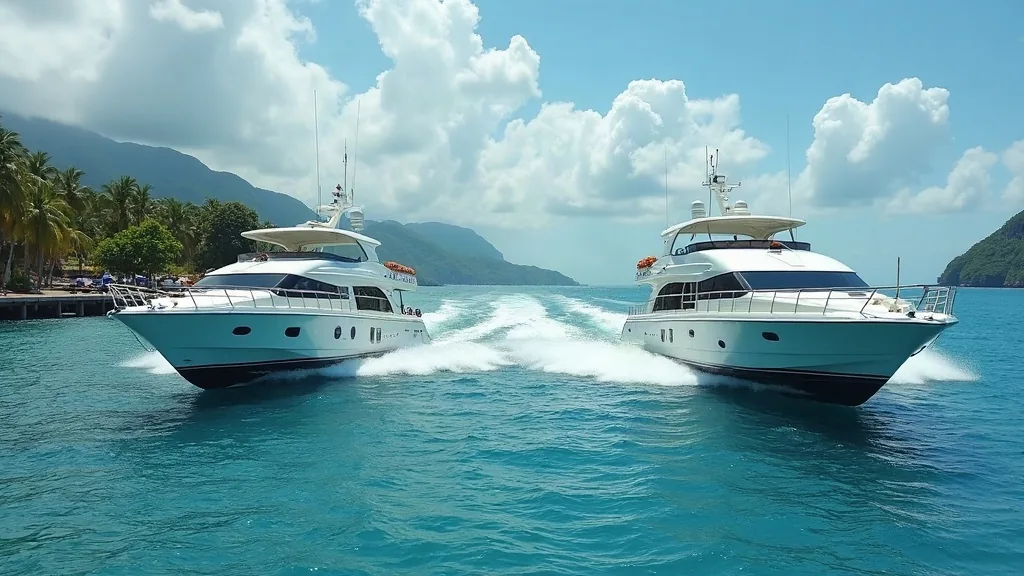
Fast boats remain the default on Indonesia’s short, established crossings — Bali–Gili, Bali–Lombok, Jakarta’s Thousand Islands — because the ports, jetties and operators already exist there. A seaplane earns its place only where the destination has water access but no port near the resort, or where open-water swell makes a long boat leg unpleasant. As of 2026, that option exists on very few routes.
Indonesia has no scheduled seaplane network yet. What exists is a mix of start-ups, trial flights and regulatory groundwork — mostly built around the Cessna Grand Caravan EX amphibian and the DHC-6 Twin Otter floatplane. Operators quote charters on enquiry, not on a published fare board, so treat any specific price or flight-time claim you see elsewhere with caution unless it names a source and a date.
Are seaplanes faster than fast boats?
Sometimes, but nobody currently publishes route-level flight times or crossing times you can compare minute for minute, so we won’t invent them. What’s true structurally: a seaplane skips the road transfer to a harbour and the harbour transfer at the other end if it can land directly off a resort’s jetty or lagoon. A fast boat still needs a car to the port, a queue at check-in, and often a smaller boat or wade-in at the destination if there’s no deep-water dock. Where a seaplane can genuinely go point-to-point on water, that door-to-lagoon advantage is real even without a stopwatch number attached to it.
Where no water aerodrome or trial site has been approved yet — which is most of the archipelago as of 2026 — the seaplane option simply doesn’t exist for that crossing, and the fast boat wins by default because it’s the only mode running.
Are seaplanes safer in rough seas?
They’re sensitive to different weather than boats, not immune to weather. A fast boat’s main enemy is swell — a rough Lombok Strait or Bali Strait crossing can mean a pounding ride, delayed departure, or a cancelled sailing when port authorities close the harbour. A seaplane’s main enemies are visibility and crosswind at the water landing site; a Twin Otter or Caravan amphibian generally handles a choppy but non-threatening sea surface better than a small boat handles the same chop, but poor visibility or a gusty crosswind can ground a seaplane just as effectively as swell cancels a boat. Neither mode is swell-proof or wind-proof — they’re vulnerable to different conditions, which is exactly why route-by-route judgment matters more than a blanket “seaplane is safer” claim.
| Attribute | Seaplane | Fast boat |
|---|---|---|
| Door-to-lagoon time | Can be direct if a water aerodrome exists near the resort; otherwise not an option at all | Requires harbour transfer both ends; well-established infrastructure on popular routes |
| Weather sensitivity | Grounded by poor visibility or strong crosswind at the landing site | Delayed or cancelled by swell and harbour closures |
| Baggage / dive gear | Limited by aircraft weight and space; charter operators set their own allowances | Generally more forgiving for bulky dive or surf gear |
| Comfort | Short, scenic, low-vibration on calm water; cabin space is tight | Ranges widely by boat class; open water can be rough regardless of vessel size |
| Cancellation handling | Charter-based — reschedule tends to run through the operator directly | Ferry/charter operators on busy routes usually have more same-day alternate sailings |
| Scenic value | Aerial view of reef, coastline and islands is the main appeal | Sea-level views only |
| Environmental note | Niche, low-frequency operations; no public emissions or noise data for Indonesian routes as of 2026 | Established diesel-engine fast boats on most routes |
Which routes actually have a seaplane option in 2026?
This is the part worth checking before you assume either mode is available — several routes people ask about are still planned, not running.
| Route | Seaplane status (2026) |
|---|---|
| Bali – Gili | None. No named operator or approved water site serves this crossing as of 2026. |
| Bali – Lombok | Planned. Lombok appears in Santai Seaplane’s intended network and in Sama Sama Seaplanes’ longer-term route plan, not yet in commercial service. |
| Batam – Bawah (Anambas) | Operating. Bawah Reserve runs two DHC-6 Twin Otter Series 300 seaplanes for guests connecting via Batam — the one route in this set with an active service. |
| Bali – Banyuwangi (Bali Strait) | Planned. Aman Air’s Twin Otter service between Benoa Harbour and Pang Pang Bay was targeted for early-to-mid 2026 per regional reporting; Santai Seaplane also named Banyuwangi as its primary operations hub. |
| Jakarta – Thousand Islands | None confirmed. No named operator or certified water site serves this crossing as of 2026. |
| Padang – Mentawai | Planned. Sama Sama Seaplanes has water base registration in progress at DJPU with Mentawai as its first intended route. |
Sites like Lake Toba, Pulau Gili Iyang and Pulau Senua also appear in Kemenhub planning documents as future water aerodromes, alongside unspecified approved sites in southern Bali — none of these are confirmed regular routes yet, and there’s no complete public registry of certified water-landing sites to check against.
When should you still take the boat?
Take the fast boat whenever the route is one of the busy, already-certified crossings — Bali–Gili and Bali–Lombok are the clearest examples — where boat operators run frequent daily departures, competition keeps options open if one sailing is cancelled, and no seaplane service exists to compare against anyway. Also default to the boat whenever you’re carrying dive gear, surfboards or heavy luggage beyond a light day bag, since fast boats generally handle bulk better than a small amphibian aircraft with its own weight limits. If your itinerary changes at short notice, boats on high-frequency routes typically give you more same-day rebooking options than a single charter aircraft does.
How a quote works
- Tell us the crossing. Send your route, dates and party size via WhatsApp.
- We check what’s actually running. We confirm whether a seaplane option exists for that specific crossing as of your travel dates, or whether it’s still in planning.
- You get both quotes side by side. Fast boat and seaplane (where available), with the trade-offs above applied to your specific baggage, timing and comfort needs.
- We book through licensed operators. Juara Holding Group is an independent coordination desk, established 2015 — we arrange transport through vetted licensed operators and never operate the aircraft or vessels ourselves.
Book your crossing
We check whether a seaplane option exists for your specific crossing and quote both fast boat and seaplane side by side, so you’re not guessing which mode actually serves your route. Reach the desk on WhatsApp at 6281139414563 or email bd@juaraholding.com — Juara Holding Group arranges both modes through licensed partners; we are not the operator of either.
Frequently Asked Questions
Is there a seaplane between Bali and the Gili Islands yet?
Not as of 2026. No operator or certified water-landing site serves a Bali–Gili crossing, so fast boats and the standard Padang Bai or Serangan ferry routes remain the only options. Ask us for a current check before booking, since operator plans in this space change during the year.
Why do some seaplane routes show as “planned” instead of confirmed?
Commercial water landing requires a demonstration flight, DJPU water-base registration and, usually, an Air Operator Certificate or a virtual-carrier arrangement under one. Several operators — Santai Seaplane, Sama Sama Seaplanes, Aman Air — have announced routes and targeted 2026 launches, but announced is not the same as flying paying passengers yet.
Can I request dive gear or surfboards on a seaplane charter?
Amphibian aircraft like the Cessna Grand Caravan EX and Twin Otter have set weight and space limits that individual charter operators define per aircraft and per flight. Tell us your gear list when you enquire; we’ll confirm allowances with the specific operator rather than guessing a generic limit.
Does Juara Holding Group operate the seaplanes or boats?
No. Juara Holding Group is an independent coordination desk, arranging both seaplane and fast-boat transport through licensed operators and vessel owners. We don’t own or operate the aircraft or boats, and we’re not a licensed aviation or maritime authority — we help you compare and book what’s actually running.